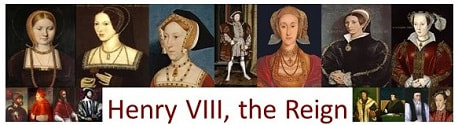
Henry VIII,the Reign
  • Henry VIII: The Reign | Break with Rome, Six Wives & English Reformation
  • Henry VIII Timeline
  • Why Henry VIII Broke with Rome
  • Reformation Parliament (1529–1536)
  • Thomas Wolsey Biography | Cardinal, Chancellor & Henry VIII’s Chief Minister
  • The Six Wives of Henry VIII
  • Thomas Wolsey’s Quest to be Pope
  • Royal Progress of 1535
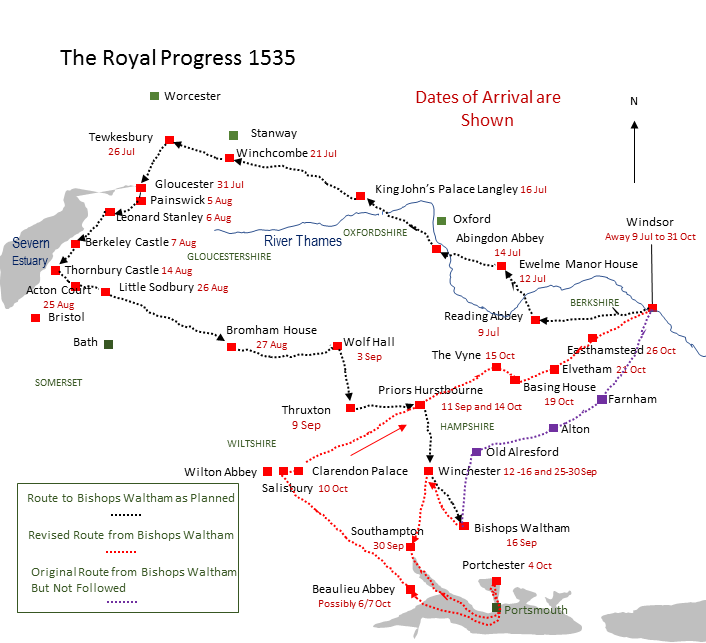
​The Royal Progress of 1535: Anne Boleyn, Wolf Hall and the Road West
In the summer and autumn of 1535, Henry VIII and Anne Boleyn travelled west.
On the surface, it was a royal progress: a great moving court, passing from house to house, receiving hospitality, hunting, displaying majesty, rewarding loyalty and reminding the country that the king’s presence was itself a form of government. But this was no ordinary journey. It took place only months after Henry had been declared Supreme Head of the Church of England, and only weeks after the executions of Thomas More and Bishop John Fisher. The old religious order had been shaken. The papacy had been rejected. The monasteries were under scrutiny. The future of England was being remade.
The 1535 progress therefore carried Henry and Anne through more than countryside. It moved through a landscape loaded with religious, dynastic and political meaning.
It passed through old ecclesiastical centres, aristocratic houses, reforming territory, royal hunting grounds and the estates of families whose fortunes would soon rise or fall with frightening speed. Among the most significant of these places was Wolf Hall, the Seymour family seat on the edge of Savernake Forest.
Wolf Hall has often been remembered in a romanticised way, as if it were the place where Henry VIII first noticed Jane Seymour and began the next episode in the familiar tale of “the six wives.” But that is too small a story. The deeper significance of Wolf Hall lies not in courtship, but in politics. In 1535 Henry entered Seymour territory: a household rooted in royal service, forest authority, western connections, and the factional future of the Tudor regime.
The Royal Progress of 1535 was not the road to a love affair. It was part of the road to Anne Boleyn’s fall, the Seymour ascendancy, and the consolidation of Henry’s break with Rome.
A Progress Through a Changed Kingdom
Royal progresses had long been part of English kingship. They allowed the king to be seen, entertained and obeyed. They also transferred the cost of the court onto wealthy hosts, who were expected to feed, house and impress the royal household. For Henry VIII, progresses had an additional attraction: they allowed him to hunt.
But in 1535, the king was not merely touring his realm. He was asserting a new order.
The Act of Supremacy had made Henry the head of the Church in England. The Treasons Act made denial of that supremacy dangerous. Thomas More and John Fisher had refused the oath and paid with their lives. Anne Boleyn, whose marriage had become inseparable from the break with Rome, was still queen. Yet her position was not secure. She had not produced a living son. She had enemies at court. And the religious revolution which had brought her to the throne was beginning to take on a life of its own.
The progress westwards therefore came at a moment of transition. The king and queen travelled together, but the political ground beneath them was shifting.
To understand the journey, we must resist the temptation to treat it as a romantic prelude to Henry’s next marriage. The more important question is not whether Henry noticed Jane Seymour at Wolf Hall. It is why the Seymour household, and the world around it, became so useful at precisely this point in the reign.
The Road West
The progress moved through southern and western England, touching places that mattered for different reasons: old monastic houses, episcopal centres, noble estates, royal memories and reforming associations.
It carried the court into a region where ancient religious loyalties and new evangelical pressures existed side by side. Gloucestershire and Wiltshire were not just pretty scenery. They were politically sensitive landscapes. They connected the court to the west of England, to the Welsh Marches, to networks of gentry influence, and to families with deep roots in royal service.
The westward movement mattered because the Tudor regime was no longer simply governing from London. It was testing, displaying and enforcing a new settlement across the country.
Henry’s supremacy was still fresh. The religious houses were not yet dissolved, but their future was already under threat. Cromwell’s officials were preparing the machinery that would examine, value and ultimately destroy them. The old church still stood, but its independence had been broken.
Against this background, every major stop on the progress acquired meaning. The king was not merely visiting. He was occupying the landscape of his new supremacy.
Little Sodbury: Tyndale Country
One of the most suggestive points on the western route was Little Sodbury.
Little Sodbury was associated with Sir John Walsh and with the earlier career of William Tyndale, whose English New Testament had been condemned by church authorities but whose work would become central to the religious transformation of England. Tyndale had lived for a time in this world of Gloucestershire gentry households, evangelical curiosity and anti-clerical frustration.
That does not mean Anne Boleyn controlled this territory, or that the progress should be read as a simple evangelical triumph. The reality was more complicated. The west contained overlapping religious currents: reformist, conservative, anti-clerical, humanist, local, aristocratic and deeply traditional.
But Little Sodbury helps to show why the progress cannot be reduced to court gossip. Henry and Anne were travelling through a country in which the battle over Scripture, clerical authority and obedience to Rome had already been fought in drawing rooms, manor houses, pulpits and private libraries.
Tyndale had once been hunted as a heretic. By 1535, the king who had condemned Lutheran heresy had also broken with the pope. England was entering a contradiction: reforming without yet becoming Protestant; rejecting Rome while still punishing some evangelicals; using anti-clericalism while claiming Catholic orthodoxy.
The progress moved through that contradiction.
Wolf Hall: Seymour Territory
The most famous stop on the progress was Wolf Hall, or Wulfhall, the Seymour family seat near Burbage and Great Bedwyn in Wiltshire.
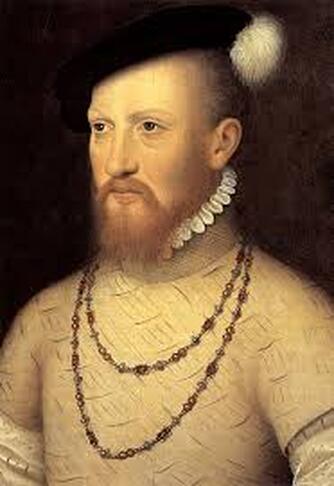
This was the home of Sir John Seymour and his family. His daughter Jane would become Henry VIII’s third wife in 1536. His son Edward Seymour would become Duke of Somerset and Lord Protector after Henry’s death. Another son, Thomas Seymour, would rise dangerously close to the centre of Tudor power before being executed in the next reign.
But in 1535, none of that had yet happened.
The Seymours were not yet the royal family’s nearest kin. They were a rising gentry family with court connections, military service, local authority and a valuable position in the landscape around Savernake Forest. Their importance was not merely domestic. It was territorial and political.
Wolf Hall stood close to Savernake Forest, a royal hunting landscape associated with the hereditary wardenship held by the Seymours. That matters. Royal hunting was not a hobby in the modern sense. It was an aristocratic language of power. A household that could receive the king, provide sport, manage access to forest land, and host the moving court was offering more than accommodation. It was offering service, loyalty and opportunity.
Savernake made Wolf Hall a place where local authority and royal pleasure met. The Seymours could receive Henry not simply as private hosts, but as a family embedded in a royal forest world. They belonged to a culture of service, hunting, land management and courtly usefulness.
This is why Wolf Hall should not be treated as a love-story location.
The question is not whether Henry found Jane Seymour attractive there. The question is how a household like the Seymours’ became a plausible political alternative to Anne Boleyn’s increasingly dangerous position.
Jane Seymour’s later marriage to Henry was not simply a romantic substitution. It offered a different factional settlement. The Seymour family could present itself as less divisive than the Boleyns, acceptable to more conservative opinion, yet not necessarily hostile to the king’s supremacy. In that sense, Jane was useful because she could help stabilise what Anne had helped to destabilise.
Anne Boleyn had been associated with the break from Rome. Jane Seymour could be used to consolidate it.
Cromwell and the Seymour Opening
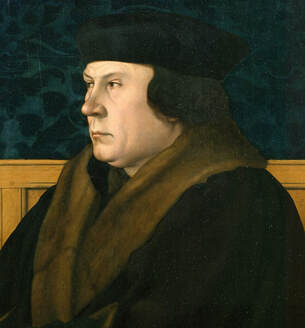
Thomas Cromwell’s role is essential.
By 1535, Cromwell was no longer just Wolsey’s former servant or a clever legal administrator. He had become the chief architect of the Henrician supremacy. He understood that the break with Rome required more than statutes. It required enforcement, patronage, alliances and a working political settlement.
The Seymour connection was useful because it offered a route away from the polarising Boleyn ascendancy without abandoning the anti-papal revolution. A new queen from a less controversial household could soothe anxieties while leaving the king’s supremacy intact.
This does not require us to imagine a neat conspiracy fully formed in 1535. Politics rarely works so cleanly. But the ingredients were present: Anne’s vulnerability, Henry’s need for a male heir, Cromwell’s need to protect and extend the supremacy, the availability of Jane Seymour, and the presence of a family whose roots reached into the west of England and the wider Marcher-connected world.
The Seymours were not isolated. Their rise sits alongside other western and Marcher networks that mattered in Tudor politics: the Herberts of South Wales, the Dudleys of the West Midlands, and the broader world of gentry and noble families whose fortunes were tied to service, land, reform and royal favour.
Wolf Hall therefore becomes a gateway. It marks the point where the progress entered a household that would soon become central to the next phase of Henry’s reign.
Anne Boleyn on the Road
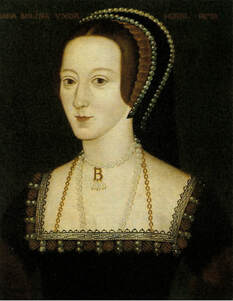
Anne Boleyn was still queen during the progress. She travelled beside Henry as the woman for whom he had overturned the old order of Christendom in England.
But her triumph was fragile.
Her marriage had not produced the son Henry wanted. Her enemies had not disappeared. Her religious associations made her valuable to reformers but dangerous to conservatives. Her presence at court remained powerful, but it was also increasingly contested.
The western progress must therefore be seen as a journey made under tension. Anne was not yet defeated, but the forces that would destroy her were gathering.
There is a tragic irony in imagining Anne entering Wolf Hall in 1535. She was still queen. Jane Seymour was still a lady of the court. Sir John Seymour was still a host rather than the father of a queen. Yet within a year Anne would be dead, Jane would be married to Henry, and the Seymour family would be on the road to extraordinary power.
The progress did not cause Anne’s fall. But it passed through the political landscape from which her replacement would emerge.
Hunting, Hospitality and Power
Henry VIII loved hunting. That fact should not be dismissed as colourful background. Hunting shaped the rhythm of court life, the siting of royal houses, the value of forests, and the prestige of those who could host the king.
A royal hunt was a display of hierarchy. It required land, deer, horses, servants, equipment, food, lodging and local organisation. It brought together nobles, courtiers, officers and household servants in a ritual of controlled access to the king.
To host Henry near a royal hunting forest was to enter the theatre of kingship.
Savernake Forest therefore gives Wolf Hall its deeper significance. The Seymours were not merely presenting Jane. They were presenting a household, a territory and a form of service the king understood instinctively. The forest reinforced their usefulness. It placed them within a landscape of royal pleasure and political access.
For a king who ruled through presence as much as paperwork, that mattered.
Clarendon: The Past Reused
The progress also touched places associated with older conflicts between crown and church.
Clarendon carried memories of Henry II and Thomas Becket: royal authority, clerical privilege and the long history of struggle between kings and ecclesiastical power. For Henry VIII, such memories were not dead history. They could be repurposed.
The break with Rome was presented not as novelty, but as recovery: the restoration of ancient royal rights against foreign and clerical encroachment. Henry VIII’s regime repeatedly claimed that it was not inventing royal supremacy, but reviving the true authority of the English crown.
This is why the landscapes of the progress matter. They allowed the Tudor monarchy to wrap new policy in old memory. Ancient sites, episcopal centres and royal associations could all be made to support the argument that the king had always possessed authority over the church within his realm.
The past became ammunition.
The Meaning of the 1535 Progress
The Royal Progress of 1535 should be read as one of the great transitional journeys of Henry VIII’s reign.
It took place after the legal break with Rome but before the full destruction of the monasteries. It took place while Anne Boleyn was still queen but before her fall. It took place while Cromwell was building the machinery of supremacy, visitation and enforcement. It took place before the Seymour family reached the summit, but after they had become visible as a possible alternative power connection.
The journey therefore sits between two worlds.
Behind it lay Wolsey, Catherine of Aragon, papal diplomacy and the long failure of the annulment. Around it lay Anne Boleyn, evangelical pressure, anti-clerical politics and the assertion of royal supremacy. Ahead of it lay Jane Seymour, the birth of Edward VI, the dissolution of the monasteries, and the factional struggles that would dominate the later reign.
To reduce this progress to the story of Henry noticing another woman is to miss the point.
The real story is that Henry VIII moved through a kingdom being politically and religiously re-engineered. The families who hosted him were not passive scenery. They were participants in a dangerous struggle for access, survival and advancement.
Wolf Hall matters because it shows how a family could move from local service to national power. Savernake Forest matters because it reveals the territorial base behind that rise. Jane Seymour matters not as the heroine of a romance, but as the dynastic and factional solution that emerged when Anne Boleyn became politically disposable.
The 1535 progress was the road west. But it was also the road from Anne to Jane, from Boleyn disruption to Seymour consolidation, and from the break with Rome to the harder business of making that break permanent.
z
  • Henry VIII: The Reign | Break with Rome, Six Wives & English Reformation
  • Henry VIII Timeline
  • Why Henry VIII Broke with Rome
  • Reformation Parliament (1529–1536)
  • Thomas Wolsey Biography | Cardinal, Chancellor & Henry VIII’s Chief Minister
  • The Six Wives of Henry VIII
  • Thomas Wolsey’s Quest to be Pope
  • Royal Progress of 1535